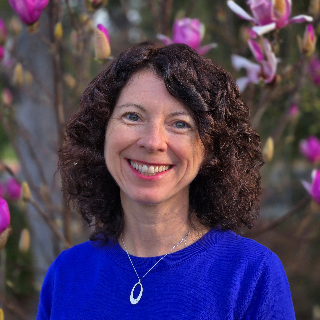
About Me
I believe healing often comes less from having the right answers and more from finding enough spaciousness to see yourself clearly again — especially when a diagnosis, a label, or a difficult season has started to feel like the whole story. My clinical approach is grounded in a trauma-informed foundation, recognizing that many of the people I will work with carry histories that shape how safety, trust, and change unfold — in the therapy room and beyond it. Within that foundation, I draw on Cognitive Behavioral Therapy to offer concrete, teachable tools for managing distressing thought patterns, and Acceptance and Commitment Therapy to build psychological flexibility around what can't easily be changed — shifting the goal from symptom elimination to values-driven living. I'm also drawn to Narrative Therapy's core belief that a person is never the problem; the problem is the problem. I want to help clients separate from that story and re-author one that reflects their full agency and resilience. Together, these approaches let me offer both structure and spaciousness — skills where skills are needed, without ever losing sight of the larger story a client is living inside.
There was a point — while I was simultaneously fighting for my daughter's IEP and watching a talented colleague quietly burn out under a system with no language for what she needed — when several threads I'd been pulling on separately suddenly tied into one knot. In corporate leadership, I'd watched capable people get stuck not for lack of skill or will, but because the systems around them offered plenty of structure and almost no spaciousness — no room to step back and see themselves clearly. As my daughter's advocate, I fought the same fight in a different arena: schools, insurers, and medical systems long on procedure and short on room for who she actually was. And in my own life, I recognized the same pattern turned inward — how easily a system's limits become a person's internalized story about themselves. What crystallized in that moment was this: the barrier is rarely the person. It's the system they're embedded in, and the narrative they've come to believe about themselves within it. That realization pulled me out of a career spent building systems, and toward one spent training to help people find room to breathe inside them.
As a graduate trainee completing my clinical field experience, I work with children, adolescents, and individual As a graduate trainee completing my clinical field experience, I work with children, adolescents, and adults. I'm building a practice around the populations I care most about: children and adolescents navigating anxiety, ADHD, or neurodivergence; parents and caregivers stretched thin trying to hold everything together; and adults navigating work-life balance, corporate burnout, or their own neurodivergence — including those advocating for themselves or a child through special education systems. I'm also especially interested in demoralization and the quieter, long-term effects of childhood trauma that continue to shape relationships, work patterns, and self-trust, whether in childhood or well into adulthood. You don't need a tidy label for what you're carrying, or all the answers before we begin. If you're looking for a therapist-in-training who will meet you with warmth, structure, and enough spaciousness to help you reconnect with your own agency, I'd welcome the opportunity to work together.
Therapy Methodologies
• Trauma-informed foundation / Trauma-informed approach
• Cognitive Behavioral Therapy (CBT)
• Acceptance and Commitment Therapy (ACT)
• Narrative Therapy
Areas of Focus
• Children and adolescents navigating anxiety, ADHD, or neurodivergence
• Parents and caregivers who are stretched thin
• Adults navigating work-life balance or corporate burnout
• Adults with their own neurodivergence
• Individuals advocating for themselves or a child through special education systems (IEPs, schools, insurers, medical systems)
• Demoralization
• Quieter, long-term effects of childhood trauma that continue to shape relationships, work patterns, and self-trust (in childhood or adulthood)
• Reconnecting with personal agency, resilience, and re-authoring life narratives
• Finding spaciousness to see oneself clearly beyond diagnoses, labels, or difficult seasons